제인 에어 학습자료 — 미국 유학·AP English·SAT Reading 대비
영어 원문을 근거로 AP English Literature, SAT Reading, IB English, 미국 학교 에세이까지 연결하는 실전 학습 가이드입니다.
이 학습자료는 미국식 문학 독해와 영어 에세이 작성을 목표로 합니다. 작품 전체 흐름을 먼저 잡고 싶다면 본문 해설을 먼저 읽어도 좋습니다.
이 자료의 목표
『제인 에어』는 AP English Literature, SAT Reading, IB English에서 다루기 좋은 요소가 많습니다. 1인칭 회고 서술, 성장소설 구조, 고딕 배경, 계급과 젠더, 종교와 자기 존중이 한 작품 안에서 서로 연결됩니다.
이 자료를 끝까지 보면 다음을 연습할 수 있습니다.
- 제인의 화자가 독자의 판단을 어떻게 이끄는지 설명하기
- 붉은 방, 손필드, 황야, 퍼딘 같은 장소를 상징적으로 읽기
- 사랑, 양심, 자기 존중의 갈등을 thesis로 바꾸기
- 로체스터를 단순한 영웅이나 악인으로 줄이지 않고 분석하기
- 짧은 원문 인용을 AP-style commentary로 확장하기
- SAT Reading식 inference, function, tone, diction 문제 풀기
1. 미국식 시험에서 왜 중요한가
- Original title: Jane Eyre: An Autobiography
- Author: Charlotte Bronte
- Published: 1847
- Main settings: Gateshead, Lowood School, Thornfield Hall, Moor House, Ferndean
- Narrator: Jane Eyre, looking back on her own life
- Central conflict: Jane wants love and belonging without surrendering conscience or self-respect
- Core themes: independence, class, gender, faith, desire, moral equality, hidden domestic violence
- Common exam angles: the red room, Lowood discipline, Thornfield's Gothic secret, the "I am no bird" speech, St. John's proposal, the ending's grammar
One-sentence summary:
Jane Eyre grows from a punished orphan into a self-possessed woman who chooses love only after she can meet it with conscience, independence, and equality.
2. 시험용 줄거리 구조
Exposition
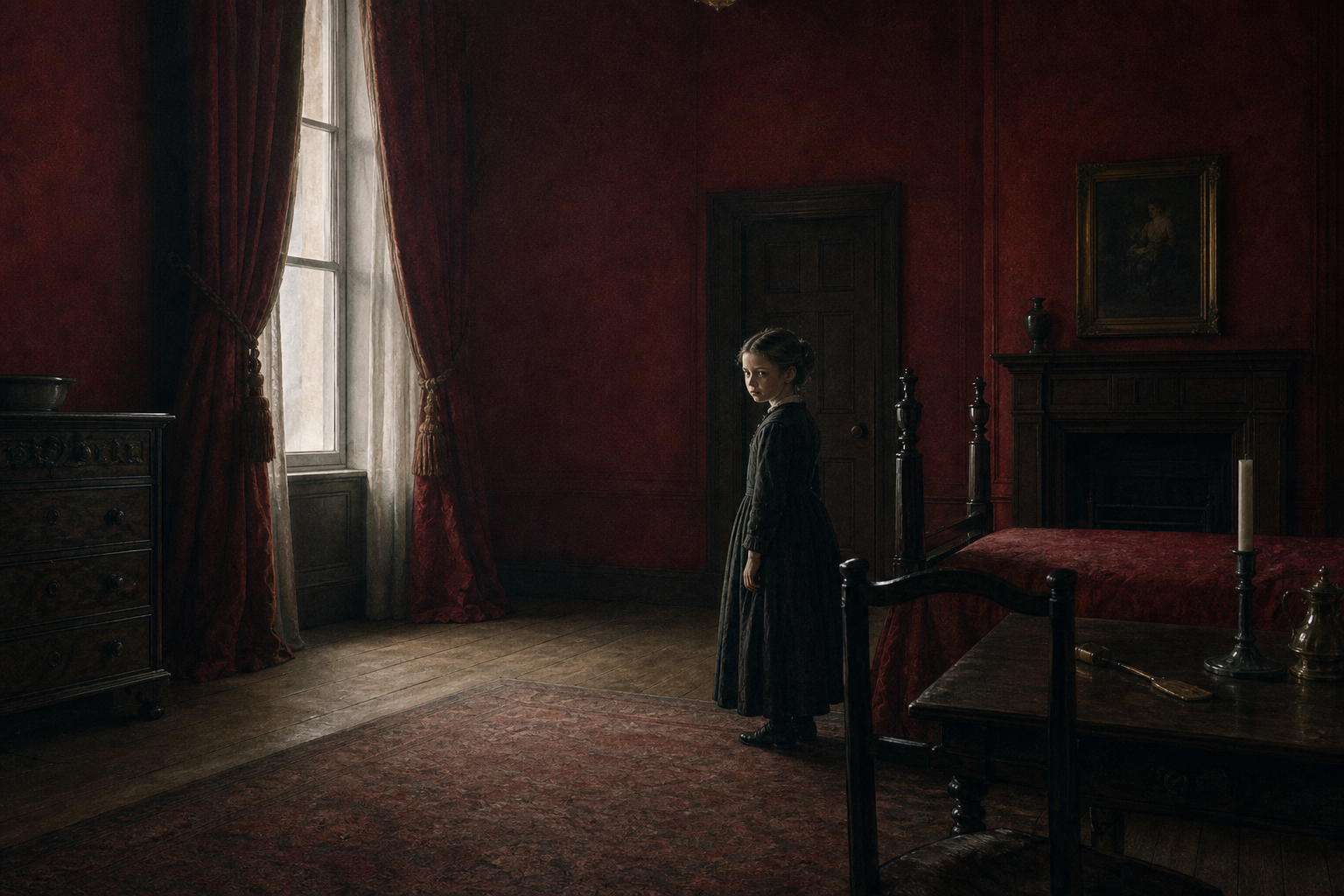
제인은 게이츠헤드에서 리드 가족과 살지만 가족으로 인정받지 못합니다. 붉은 방 장면은 이 부당함을 상징적 공간으로 압축합니다. 아이는 죽음의 기억이 있는 아름다운 방에 갇히고, 자신의 분노가 문제라는 말을 듣습니다.
Development
로우드에서 제인은 브로클허스트의 가혹한 종교적 규율을 경험하지만, 헬렌 번스와 미스 템플을 통해 용서, 공정함, 자기 통제를 배웁니다. 학교는 제인을 훈련하지만, 제인은 안정만으로는 충분하지 않다고 느끼고 가정교사 자리를 찾아 떠납니다.
Thornfield romance and Gothic complication
손필드에서 제인은 아델을 가르치고 로체스터와 지적·감정적으로 강하게 연결됩니다. 그러나 웃음소리, 화재, 공격, 잠긴 공간은 저택의 숨겨진 결혼을 가리킵니다. 로체스터에게 이미 버사 메이슨이라는 아내가 있다는 사실은 로맨스를 도덕적 위기로 바꿉니다.
Crisis
로체스터는 제인에게 법 밖에서 함께 살자고 말합니다. 제인은 그를 사랑하지만, 그런 선택이 자기 양심을 파괴한다는 것을 압니다. 그래서 손필드를 떠납니다. 이 장면은 작품의 핵심입니다. 제인은 사랑을 거절하는 것이 아니라, 자기 존중을 잃는 사랑을 거절합니다.
Second test
제인은 황야에서 거의 죽을 뻔하다가 리버스 남매에게 구조되고, 유산과 가족을 얻습니다. 세인트 존은 제인에게 선교사의 아내가 되라고 요구합니다. 이번 시험은 passion이 아니라 loveless duty입니다. 제인은 거룩해 보이는 자기 소멸도 거절합니다.
Resolution
제인은 로체스터의 목소리를 듣고 돌아가고, 손필드가 불탄 뒤 퍼딘에서 그를 다시 만납니다. 제인은 돈과 가족과 선택권을 가진 사람이 되었고, 로체스터는 더 이상 손필드의 지배자가 아닙니다. "Reader, I married him"은 제인이 결말의 주어임을 보여 줍니다.
시험 포인트: 이 작품을 단순히 순종의 보상으로 쓰면 약합니다. 더 강한 thesis는 제인이 conscience와 submission, love와 possession을 구분하는 법을 배운다는 것입니다.
3. 핵심 원문 구절 읽기
이 구절들은 외우기 좋은 명문이 아니라 close reading 훈련용 근거입니다. speaker, situation, diction, imagery, syntax, tone, theme를 함께 보세요. 특히 『제인 에어』는 성인 제인이 어린 제인을 회상하며 해석하는 작품이므로, 한 문장 안에 당시 감정과 나중의 판단이 함께 들어갑니다.
Passage 1: I resisted all the way
I resisted all the way: a new thing for me, and a circumstance which greatly strengthened the bad opinion Bessie and Miss Abbot were disposed to entertain of me.
Context: Jane is taken to the red room after fighting back against John Reed.
Close reading: The adult narrator names resistance as "a new thing," showing both the child's fear and the birth of active self-defense.
Essay use: Use it for childhood injustice, narration, rebellion, and the beginning of Jane's moral voice.
Passage 2: human beings must love something
Human beings must love something, and, in the dearth of worthier objects of affection, I contrived to find a pleasure in loving and cherishing a faded graven image.
Context: Young Jane takes her doll to bed in the lonely nursery.
Close reading: The general statement "human beings must love something" turns a child's toy into evidence of emotional deprivation.
Essay use: Use it for loneliness, attachment, and Jane's lifelong hunger for chosen affection.
Passage 3: I must keep in good health
I must keep in good health, and not die.
Context: Jane answers Brocklehurst's religious questioning before being sent to Lowood.
Close reading: The blunt syntax strips away Brocklehurst's spiritual performance and foregrounds survival.
Essay use: Use it for Bronte's critique of punitive religion and Jane's practical honesty.
Passage 4: as much soul as you
Do you think, because I am poor, obscure, plain, and little, I am soulless and heartless? You think wrong!
Context: Jane speaks to Rochester before his first proposal.
Close reading: The list of social disadvantages becomes a rejected verdict; the exclamation turns inward equality into spoken resistance.
Essay use: Use it for gender, class, spiritual equality, and voice.
Passage 5: I am no bird
I am no bird; and no net ensnares me; I am a free human being with an independent will.
Context: Rochester tries to restrain Jane emotionally and physically during the proposal scene.
Close reading: Jane reverses his bird metaphor and rejects imagery of capture, decoration, and possession.
Essay use: Use it for freedom, bodily autonomy, and the novel's anti-captivity language.
Passage 6: I care for myself
I care for myself. The more solitary, the more friendless, the more unsustained I am, the more I will respect myself.
Context: Jane decides to leave Rochester after learning he is already married.
Close reading: Repetition of "more" turns deprivation into moral intensity; self-respect becomes strongest when external support disappears.
Essay use: Use it for conscience, temptation, and the difference between love and self-erasure.
Passage 7: I am my own mistress
I told you I am independent, sir, as well as rich: I am my own mistress.
Context: Jane returns to Rochester after inheriting money and finding kinship.
Close reading: The phrase "my own mistress" uses social language of mastery to describe self-possession rather than domination over others.
Essay use: Use it for economic independence, changed power balance, and the ending.
Passage 8: Reader, I married him
Reader, I married him.
Context: Jane narrates her marriage to Rochester in the conclusion.
Close reading: The direct address and active verb make Jane the chooser and storyteller of the ending.
Essay use: Use it for narrative control, marriage, and the novel's revision of romance conventions.
4. Close Reading: 제인의 "I"를 읽는 법
『제인 에어』에서 close reading의 핵심은 줄거리보다 "누가 제인을 정의하려 하는가, 그리고 제인은 어떤 언어로 그 정의를 거절하는가"를 읽는 것입니다. 제인은 "I resisted", "I care", "I am", "I married"처럼 자기 행동과 판단을 직접 말합니다. 다른 인물들은 제인을 거짓말쟁이, 문제아, 가정교사, 작은 여자, 선교사의 도구로 부르지만, 제인은 매번 자기 문장의 주어를 되찾습니다. 그래서 답안을 쓸 때는 I가 단순한 1인칭 대명사가 아니라 voice, autonomy, moral agency를 만드는 장치임을 밝혀야 합니다.
첫 단계는 장면의 압력을 찾는 것입니다. 제인의 말은 늘 누군가의 권력에 대한 응답입니다. 게이츠헤드에서는 리드 부인의 가정 권력과 존 리드의 폭력이, 로우드에서는 브로클허스트의 종교 권력과 학교 규율이, 손필드에서는 로체스터의 남성적·경제적 권력이, 무어 하우스에서는 세인트 존의 사명과 성경적 언어가 제인을 규정하려 합니다. 좋은 close reading은 "제인이 무엇을 느끼는가"에서 멈추지 않고, 그 감정이 어떤 제도와 언어에 맞서는지 설명합니다.
두 번째 단계는 단어의 방향을 보는 것입니다. 제인은 자주 부정에서 출발해 긍정으로 갑니다. "I am no bird"는 새가 아니라는 부정이지만, 바로 뒤에서 "free human being"이라는 적극적 자기 정의로 바뀝니다. 로체스터에게 말하는 평등 선언도 "poor, obscure, plain, and little"이라는 사회적 꼬리표를 먼저 열거한 뒤, 그것이 영혼의 가치를 결정하지 못한다고 반박합니다. 이 구조를 답안에서는 concession and reversal로 설명할 수 있습니다. 제인은 자신에게 붙은 낮은 이름을 숨기지 않고, 그 이름들이 왜 충분한 설명이 아닌지를 문장 안에서 뒤집습니다.
세 번째 단계는 공간을 함께 읽는 것입니다. 붉은 방, 로우드, 손필드, 황야, 무어 하우스, 퍼딘은 단순한 배경이 아닙니다. 붉은 방은 아이를 가두는 집의 권위이고, 로우드는 굶주림과 규율을 통해 몸을 통제하는 기관이며, 손필드는 사랑과 비밀이 같은 집 안에 사는 고딕 공간입니다. 황야는 도덕적 선택이 실제 굶주림으로 바뀌는 장소이고, 무어 하우스는 가족을 주지만 사랑 없는 사명을 요구하는 장소입니다. 퍼딘은 손필드의 화려함이 사라진 뒤 제인과 로체스터가 다시 만나는 낮아진 공간입니다.
예시 1: Red Room을 읽을 때는 색채와 감금 이미지를 같이 보세요. 붉은 방의 red는 단순한 장식색이 아니라 공포, 처벌, 죽음의 기억, 억울한 분노를 한꺼번에 부릅니다. 어린 제인은 방 안에 갇히지만, 성인 화자인 제인은 그 장면을 다시 서술하면서 "왜 내가 두려웠는가"를 분석합니다. 답안 문장으로는 이렇게 쓸 수 있습니다: Bronte turns the red room into the first scene of Jane's moral education, because the physical confinement teaches Jane how unjust authority feels before she has the language to resist it.
예시 2: Lowood에서는 biblical and moral language를 조심해서 읽어야 합니다. 브로클허스트는 겸손, 죄, 지옥, 죽음 같은 단어를 아이를 낮추는 도구로 사용합니다. 반대로 헬렌 번스와 미스 템플은 같은 종교적 세계 안에서도 인내, 용서, 안정, 자비를 보여 줍니다. 그러므로 "종교가 나쁘다"가 아니라 "종교 언어가 누구의 손에 있을 때 통제가 되고, 누구의 삶에서는 위로와 윤리가 되는가"를 구분해야 합니다. 로우드 장면의 좋은 답안은 physical deprivation과 spiritual vocabulary가 어떻게 함께 작동하는지 보여 줍니다.
예시 3: Thornfield에서는 로맨스의 언어와 고딕의 언어를 동시에 읽어야 합니다. 로체스터는 제인의 정신을 알아보고 대화 상대로 대하지만, 동시에 정보를 숨기고 질투를 유도하며 경제적 우위를 가집니다. 제인이 "I am no bird"라고 말하는 순간은 사랑 고백이면서도 소유 거부입니다. 손필드의 웃음소리, 불, 잠긴 공간, 버사 메이슨은 로맨스가 숨기고 있는 결혼과 감금의 현실을 드러냅니다. 이 장면을 단순히 "Jane loves Rochester"로 쓰면 약합니다. 더 강한 답안은 "love becomes legitimate only when it stops requiring secrecy, possession, or self-erasure"라고 연결합니다.
예시 4: Bertha Mason은 괴물로만 읽으면 안 됩니다. 버사는 손필드의 attic에 갇힌 인물이자, 로체스터의 과거와 식민지적 결혼, 여성의 광기와 성적 두려움이 고딕 이미지로 압축된 인물입니다. 현대적 답안에서는 작품이 버사에게 충분한 내면을 주지 않는다는 한계도 인정할 수 있습니다. 동시에 그는 Jane-Rochester romance가 도덕적으로 완성될 수 없는 이유를 구조적으로 폭로합니다. 버사의 웃음과 불은 외부에서 침입한 공포가 아니라 집 안에 이미 존재하던 폭력의 신호입니다.
예시 5: St. John을 읽을 때는 차가운 의무의 문장을 보세요. 세인트 존은 로체스터처럼 열정으로 제인을 끌어당기지 않습니다. 그는 mission, duty, sacrifice, God 같은 언어로 제인의 양심을 압박합니다. 여기서 제인의 거절은 불법적 사랑만 거절하는 것이 아니라, 사랑 없는 거룩함도 거절하는 것입니다. AP Lit 답안에서는 St. John을 Rochester의 반대편 유혹으로 놓으면 좋습니다. 한쪽은 passion without law이고, 다른 한쪽은 duty without love입니다. 제인의 autonomy는 두 극단을 모두 거절할 때 완성됩니다.
실전 close reading 문장은 네 부분으로 만들면 안정적입니다. 첫째, 장면의 압력을 한 문장으로 제시합니다. 둘째, 핵심 단어 두세 개를 고릅니다. 셋째, diction, syntax, imagery, narration 중 하나를 이름 붙입니다. 넷째, 그 장치가 제인의 voice/autonomy를 어떻게 드러내는지 결론 냅니다. 예를 들어 "By moving from social labels to spiritual equality, Bronte makes Jane's speech a form of resistance rather than a plea for pity."처럼 쓰면 줄거리 요약이 아니라 문학 분석이 됩니다.
5. Literary Devices: 제인 에어 답안에 바로 쓰는 장치들
First-person retrospective narration
성인 제인이 어린 제인을 회상합니다. 그래서 독자는 아이의 감정을 즉각적으로 느끼면서도, 나중의 제인이 그 감정을 어떻게 해석하는지도 함께 듣습니다. 이 구조는 제인의 분노를 단순 반항이 아니라 moral judgment로 바꿉니다. 예를 들어 붉은 방 장면은 어린아이의 공포로 시작하지만, 성인 화자의 분석 때문에 unjust authority의 첫 사례가 됩니다. 답안에서는 "the retrospective narrator gives childhood emotion adult moral shape"라고 정리할 수 있습니다.
Gothic setting
붉은 방과 손필드는 고딕 분위기를 사용해 현실의 권력 문제를 드러냅니다. 어둠, 잠긴 방, 웃음소리, 불, 비밀은 단순 공포가 아니라 가정 안에 숨겨진 폭력과 거짓말의 형태입니다. 붉은 방은 아이를 유령과 죽음의 기억 속에 가두고, 손필드의 attic은 결혼 제도와 남성 권력이 숨긴 문제를 집의 구조 안에 넣습니다. Gothic imagery는 "무서운 분위기"가 아니라 respectable domestic space가 얼마나 많은 억압을 감출 수 있는지 보여 주는 방식입니다.
Fire and ice imagery
불은 passion, anger, danger, revelation과 연결됩니다. 제인의 분노, 로체스터의 침실 화재, 손필드의 최종 화재는 모두 감정과 비밀이 더 이상 억눌릴 수 없을 때 나타납니다. 차가움은 deprivation, repression, spiritual hardness와 연결됩니다. 로우드의 추위와 굶주림은 제도의 냉혹함을 보여 주고, 세인트 존은 얼음 같은 의무의 언어로 제인을 굳히려 합니다. 로체스터가 불의 에너지라면 세인트 존은 얼음의 압력입니다. 제인은 따뜻함을 잃지 않으면서도 타 버리지 않아야 하고, 도덕성을 지키면서도 얼어붙지 않아야 합니다.
Religious allusion
작품은 종교 언어가 많지만, 신앙을 하나로만 그리지 않습니다. 브로클허스트와 세인트 존은 종교를 통제에 가깝게 사용하고, 헬렌과 미스 템플은 자비와 안정감을 보여 줍니다. 이 차이를 쓰면 essay가 깊어집니다. 브로클허스트의 언어는 아이의 몸과 평판을 낮추고, 세인트 존의 언어는 제인의 미래를 선교 사명에 묶으려 합니다. 그러나 헬렌의 용서와 미스 템플의 공정함은 신앙이 다른 사람을 작게 만들지 않을 수도 있음을 보여 줍니다.
Direct address
Reader는 제인이 독자를 자기 이야기 안으로 직접 부르는 방식입니다. 특히 결말에서 이 장치는 제인이 자기 선택의 해석권을 쥐고 있음을 보여 줍니다. "Reader, I married him"에서 중요한 것은 결혼 그 자체만이 아니라 문법입니다. 제인은 "he married me"라고 말하지 않습니다. 자신을 주어로 세우고, 독자를 증인으로 부르며, 로맨스 결말을 자기 서술의 결말로 바꿉니다. 이 장치는 narration과 autonomy를 연결하는 가장 좋은 근거입니다.
Symbolic houses
게이츠헤드는 배제, 로우드는 규율, 손필드는 욕망과 비밀, 무어 하우스는 가족과 의무, 퍼딘은 낮아진 동반자 관계를 상징합니다. 집의 이동을 따라가면 작품 전체 구조가 보입니다. 특히 손필드와 퍼딘의 대비가 중요합니다. 손필드는 화려하지만 거짓이 숨어 있고, 퍼딘은 작고 어둡지만 제인이 경제적 독립과 선택권을 얻은 뒤 도착하는 공간입니다. setting을 분석할 때는 "where the scene happens"가 아니라 "what kind of power this place makes possible"을 물어야 합니다.
Foil characters
헬렌, 블랑쉬, 버사, 다이애나, 메리, 세인트 존은 제인의 다른 가능성을 보여 주는 foil입니다. 좋은 답안은 이 인물들을 단순 장식으로 쓰지 않고, 제인이 어떤 삶을 받아들이거나 거절하는지 비교합니다. 헬렌은 용서와 인내의 가능성을, 블랑쉬는 계급적 결혼 시장을, 버사는 감금된 여성성과 숨겨진 폭력을, 다이애나와 메리는 친족적 지성과 여성 연대를, 세인트 존은 사랑 없는 사명을 보여 줍니다. Foil 분석의 목표는 "다른 인물이 있다"가 아니라 "제인이 왜 그 길을 완전히 따르지 않는가"입니다.
Biblical and moral language as pressure
『제인 에어』에서 성경적·도덕적 언어는 항상 선한 것만도, 항상 억압적인 것만도 아닙니다. 브로클허스트는 지옥과 겸손을 말하며 아이를 공개적으로 모욕하고, 세인트 존은 소명과 희생을 말하며 제인의 삶을 자기 계획에 맞추려 합니다. 반대로 헬렌과 미스 템플은 신앙이 인간을 안정시키고 품위를 지키게 할 수 있음을 보여 줍니다. 따라서 essay에서는 "religion"을 하나의 theme로만 쓰지 말고, religious language가 어떤 장면에서는 care가 되고 어떤 장면에서는 control이 되는지 구분해야 합니다.
Bird, cage, and autonomy imagery
새와 새장 이미지는 로체스터와 제인의 관계를 분석할 때 특히 유용합니다. 로체스터가 제인을 새처럼 비유할 때, 그 이미지는 작고 붙잡을 수 있는 존재를 떠올리게 합니다. 제인은 그 비유를 받아들이지 않고 "I am no bird"라고 말합니다. 이 순간 imagery가 argument가 됩니다. 제인은 자신이 장식적 대상이나 애완적 존재가 아니라 자유로운 인간이라고 선언합니다. AP 답안에서는 "Bronte makes metaphor itself a site of resistance"라고 쓸 수 있습니다.
Doubling and paired temptations
로체스터와 세인트 존은 서로 반대되는 유혹입니다. 로체스터는 열정과 사적 행복을 주지만 법과 진실을 무시하라고 요구하고, 세인트 존은 도덕적 명분과 공적 사명을 주지만 사랑과 자기 욕구를 지우라고 요구합니다. 이 짝을 잡으면 작품의 구조가 선명해집니다. 제인은 한쪽 극단을 선택하는 인물이 아니라 passion without conscience와 duty without affection을 모두 거절하는 인물입니다. 그래서 결말의 결혼은 단순한 보상이 아니라, 두 잘못된 선택을 통과한 뒤 가능한 균형으로 읽을 수 있습니다.
6. 인물 분석을 영어 답안으로 바꾸기
- Role: 이 인물이 작품 안에서 맡는 기능
- Pressure: 이 인물이 받는 욕망, 두려움, 사회적 압력
- Device: 작가가 이 인물을 보여주는 방식, 예를 들어 narration, dialogue, setting, imagery, contrast
- Essay sentence: 영어 답안에 바로 쓸 수 있는 claim 문장
| Character | Essay-ready angle |
|---|---|
| Jane Eyre | Bronte makes Jane's moral authority grow through speech: each major stage gives her a new way to say no before she can say yes freely. |
| Rochester | Rochester recognizes Jane's mind but must lose the mastery that makes his love ethically dangerous. |
| Bertha Mason | Bertha exposes Thornfield's buried violence and the limits of a romance built on secrecy. |
| Helen Burns | Helen gives Jane spiritual language, but her patience also shows what Jane cannot fully become without losing her appetite for justice. |
| St. John Rivers | St. John turns duty into a form of possession, testing whether Jane will confuse holiness with self-erasure. |
7. 주제별 Thesis 만들기
- Self-respect: Bronte presents self-respect as the condition that makes love moral rather than possessive.
- Class and gender: Jane's poverty makes her socially vulnerable, but her narration repeatedly asserts a spiritual equality that class cannot erase.
- Gothic secrecy: Thornfield's Gothic atmosphere reveals that domestic respectability can hide moral disorder.
- Religion: The novel distinguishes faith that enlarges the self from piety that disciplines, humiliates, or consumes it.
- Bildungsroman: Jane's growth depends less on outward success than on her increasing ability to interpret and defend her own conscience.
8. SAT Reading Sample
These questions are original practice items, not official SAT questions. They are designed to train inference, function, vocabulary-in-context, and evidence reasoning.
Question 1
In the red-room passage, Jane's resistance most directly reveals:
- A. her desire to impress Bessie
- B. her first active refusal of an unjust role
- C. her indifference to punishment
- D. her wish to remain at Gateshead
Answer: B. 제인이 저항을 “처음 겪는 새로운 일”처럼 느낀다는 점은, 이 장면이 단순한 성질 폭발이 아니라 부당한 역할을 더 이상 그대로 받아들이지 않기 시작한 순간임을 보여 줍니다. 다른 선택지는 장면의 공포와 자기 방어의 시작을 놓칩니다.
Question 2
The sentence "human beings must love something" functions mainly to:
- A. turn a child's attachment to a doll into evidence of emotional deprivation
- B. prove that Jane prefers toys to people
- C. introduce Rochester's romantic influence
- D. criticize all forms of childhood imagination
Answer: A. 이 문장은 인형을 좋아한다는 사소한 정보가 아니라, 애정을 받을 대상이 없던 아이가 사랑의 욕구를 어디에든 붙잡아야 했다는 증거입니다. 로체스터나 상상력 비판과는 연결되지 않습니다.
Question 3
Jane's answer to Brocklehurst, "I must keep in good health, and not die," is best read as:
- A. a theological argument about heaven
- B. a sign that she understands his doctrine perfectly
- C. a comic refusal to attend school
- D. a practical answer that exposes the harshness of his questioning
Answer: D. 브로클허스트가 죽음과 지옥을 압박할 때, 제인은 생존이라는 가장 기본적인 답을 합니다. 이 단순한 대답 때문에 그의 종교적 질문이 아이에게 얼마나 가혹한지 드러납니다.
Question 4
In the proposal scene, Jane's list "poor, obscure, plain, and little" emphasizes:
- A. qualities she hopes Rochester will correct with wealth
- B. the social labels used to underestimate her inward worth
- C. her complete lack of emotional feeling
- D. Blanche Ingram's superiority as a narrator
Answer: B. 제인은 자신을 낮게 평가하는 사회적 꼬리표를 먼저 열거한 뒤, 그것이 영혼의 가치를 결정하지 못한다고 반박합니다. 이 장면은 자기 비하가 아니라 평등 선언입니다.
Question 5
The bird-and-net metaphor is important because Jane:
- A. rejects being imagined as trapped, decorative, or owned
- B. asks Rochester to protect her from nature
- C. admits that she cannot survive outside Thornfield
- D. describes Lowood's educational method
Answer: A. 로체스터의 새 비유는 붙잡히고 길들여지는 이미지를 만들지만, 제인은 그 비유를 뒤집어 독립된 의지를 주장합니다. 자연 묘사나 로우드 교육과는 관련이 없습니다.
Question 6
When Jane says, "I care for myself," the phrase "myself" chiefly stresses:
- A. selfish disregard for others
- B. rejection of all religion
- C. loyalty to Mrs. Reed
- D. the self-respect she must preserve when no one else protects her
Answer: D. 이 문장에서 자기 돌봄은 이기심이 아니라 양심 보존입니다. 아무도 자신을 지켜 주지 않을 때 제인은 자기 자신을 배신하지 않을 책임을 말합니다.
Question 7
The structure of the novel's major houses most strongly supports which interpretation?
- A. Jane's growth happens through changing spaces that test different forms of power
- B. Jane travels because she dislikes all domestic life
- C. Bronte treats setting as decorative background only
- D. Rochester controls every place Jane enters
Answer: A. 게이츠헤드, 로우드, 손필드, 무어 하우스, 퍼딘은 각각 다른 권력과 선택을 시험하는 공간입니다. 배경은 장식이 아니라 성장 구조입니다.
Question 8
Why is St. John's proposal a serious temptation for Jane?
- A. It offers the wealth she lost at Thornfield
- B. It offers purpose and religious duty without emotional love
- C. It proves Rochester never mattered
- D. It lets her return to Gateshead with power
Answer: B. 세인트 존은 제인의 양심과 절제심을 건드리지만, 그 관계에는 사랑이 없습니다. 그래서 이 장면은 돈이나 복수가 아니라 사랑 없는 의무의 위험을 시험합니다.
Question 9
The phrase "Reader, I married him" is notable because it:
- A. removes Jane from the action
- B. uses passive grammar to emphasize fate
- C. shows that Rochester narrates the conclusion
- D. makes Jane the active subject of her marriage story
Answer: D. 이 문장은 제인을 결말의 주어로 세웁니다. 제인이 선택하고 제인이 서술한다는 점에서, 전통적 로맨스의 수동적 결말을 바꿉니다.
Question 10
Brocklehurst and St. John are alike in that both:
- A. connect religious language to control over others
- B. encourage Jane's artistic independence
- C. reject discipline as useless
- D. serve as comic relief
Answer: A. 브로클허스트는 공개적 모욕으로, 세인트 존은 거룩한 사명으로 사람을 압박합니다. 둘 다 종교 언어가 통제 방식이 될 수 있음을 보여 줍니다.
Question 11
Bertha Mason's role in the Thornfield plot primarily reveals:
- A. Jane's secret inheritance
- B. Adele's parentage
- C. the hidden violence beneath Rochester's domestic world
- D. Miss Temple's educational method
Answer: C. 버사는 손필드의 사랑 이야기가 감춰진 결혼과 감금 위에 세워져 있음을 폭로합니다. 다락은 사적인 과거가 집의 구조 전체를 지배한다는 표시입니다.
Question 12
Which statement best captures Jane's relation to Rochester before the interrupted wedding?
- A. She is emotionally indifferent to him.
- B. She loves him but resists being reduced to a dependent possession.
- C. She wants only his money.
- D. She plans to convert him into a missionary.
Answer: B. 제인은 로체스터를 사랑하지만, 소유물이나 장식품처럼 다뤄지는 것을 거부합니다. 이 긴장이 손필드 로맨스를 단순한 보상이 아니라 평등 논쟁으로 만듭니다.
Question 13
The moorland chapters after Jane leaves Thornfield emphasize:
- A. the comfort of inherited property
- B. the ease of moral decision
- C. the comic failure of Gothic suspense
- D. the material cost of preserving conscience
Answer: D. 제인의 선택은 도덕적으로 옳지만, 실제로는 굶주림과 노숙을 가져옵니다. 이 장면은 양심을 지키는 일이 현실의 몸과 생존까지 걸린 선택임을 보여 줍니다.
Question 14
Helen Burns is most useful as a foil because she:
- A. models patience and forgiveness that both influence and contrast with Jane's demand for justice
- B. proves that Jane should never resist
- C. teaches Rochester how to govern Thornfield
- D. explains Bertha's backstory
Answer: A. 헬렌은 제인에게 용서와 인내를 보여 주지만, 제인이 완전히 헬렌처럼 되는 것은 아닙니다. 두 인물의 차이가 저항과 용서의 균형을 드러냅니다.
Question 15
The fire imagery at Thornfield most often suggests:
- A. ordinary household warmth only
- B. Jane's dislike of nature
- C. passion, danger, exposure, and destructive revelation
- D. St. John's calm religious logic
Answer: C. 손필드의 불 이미지는 사랑의 열기, 위험, 비밀의 폭로를 함께 담습니다. 단순한 난방이나 분위기 장식으로만 읽으면 장면의 기능이 약해집니다.
Question 16
Jane's inheritance changes the ending because it:
- A. makes her economically independent before she chooses Rochester
- B. forces her to accept St. John's proposal
- C. proves Mrs. Reed was generous
- D. erases the importance of Lowood
Answer: A. 유산은 제인이 경제적 필요 때문에 로체스터에게 돌아가는 것이 아니게 만듭니다. 선택권이 생겼기 때문에 결말의 관계 균형이 달라집니다.
Question 17
Which reading best explains Ferndean's importance?
- A. It restores Rochester to full social command.
- B. It repeats Gateshead exactly.
- C. It lets St. John supervise the marriage.
- D. It replaces Thornfield's display and secrecy with a humbler setting for chosen companionship.
Answer: D. 퍼딘은 손필드의 화려함과 비밀을 반복하지 않습니다. 더 작고 낮아진 공간에서 제인과 로체스터는 이전보다 덜 지배적인 관계로 다시 만납니다.
Question 18
Jane's first-person narration most strongly affects the novel by:
- A. preventing readers from knowing any emotion
- B. turning experience into moral interpretation as well as memory
- C. making Rochester the only reliable judge
- D. removing social context from private feeling
Answer: B. 제인의 서술은 감정의 기록이면서 동시에 판단입니다. 그는 사건을 기억할 뿐 아니라 정의, 신앙, 계급, 자기 존중의 문제로 해석합니다.
Question 19
Blanche Ingram's function in the Thornfield section is mainly to:
- A. reveal how class performance and marriage-market display threaten Jane's hopes
- B. narrate Jane's childhood
- C. rescue Bertha from the attic
- D. replace Miss Temple as Jane's teacher
Answer: A. 블랑쉬는 제인이 쉽게 들어갈 수 없는 계급 세계를 보여 줍니다. 로체스터가 그를 이용해 제인을 질투하게 만드는 것도 로맨스 안의 권력 문제를 드러냅니다.
Question 20
The strongest interpretation of Jane's final marriage is that:
- A. Jane gives up all independence for romance
- B. Bronte rejects love as morally dangerous
- C. marriage becomes acceptable only after Jane can choose it from independence rather than need
- D. Rochester's original deception is proven harmless
Answer: C. 결말의 결혼은 제인이 돈, 가족, 자기 판단을 얻은 뒤에 가능합니다. 그래서 사랑은 의존이나 거짓말이 아니라 선택의 형태가 됩니다.
9. AP Lit Essay Questions
아래 문항은 구체적 장면을 thesis, outline, textual evidence, commentary로 바꾸는 AP Lit 스타일 연습 질문입니다.
Essay Question 1
붉은 방 장면을 분석하세요. 브론테가 이 공간을 통해 사회적 판단과 제인의 내면적 정의감 사이의 갈등을 어떻게 시작하는지 설명하세요.
Essay Question 2
『제인 에어』의 1인칭 회고 서술이 어린 제인의 분노를 독자가 이해하는 방식에 어떤 영향을 주는지 분석하세요.
Essay Question 3
로우드 학교는 제인에게 규율과 저항을 동시에 가르칩니다. 헬렌 번스와 미스 템플을 활용해 이 교육의 복합성을 설명하세요.
Essay Question 4
로체스터는 제인의 독립성을 알아보는 동시에 위협하는 인물입니다. 두 면이 어떤 장면에서 드러나는지 분석하세요.
Essay Question 5
손필드의 고딕 장치가 가정의 존중받는 겉모습 안에 숨은 도덕적 문제를 어떻게 드러내는지 설명하세요.
Essay Question 6
로체스터의 청혼과 세인트 존의 청혼을 비교하세요. 두 청혼은 각각 제인의 자기 존중을 어떤 방식으로 시험하나요?
Essay Question 7
작품의 불 이미지를 분석하세요. 불은 passion, danger, exposure, transformation과 어떻게 연결되나요?
Essay Question 8
경제적 의존과 유산이 제인의 자유로운 선택에 어떤 역할을 하는지 설명하세요.
Essay Question 9
브론테가 종교적 신앙과 종교적 통제를 어떻게 구분하는지 분석하세요.
Essay Question 10
작품의 direct address, 특히 Reader의 사용이 제인의 서술 권위를 어떻게 만드는지 설명하세요.
Essay Question 11
가정교사라는 직업이 제인을 사회적으로 취약하게 만들면서도 관찰자로 예리하게 만드는 방식을 분석하세요.
Essay Question 12
버사 메이슨의 기능을 고딕 장치와 현대 독자의 비판적 질문이라는 두 관점에서 논하세요.
Essay Question 13
작품의 여러 집이 제인의 성장을 보여 주는 상징적 지도를 어떻게 만드는지 설명하세요.
Essay Question 14
평범한 외모, 가시성, 도덕적 가치의 관계를 제인의 자기 표현과 연결해 분석하세요.
Essay Question 15
제인과 로체스터의 대화가 로맨스를 평등에 관한 논쟁으로 바꾸는 방식을 분석하세요.
Essay Question 16
세인트 존 리버스를 로체스터의 foil이자 제인에게 별도의 위험을 주는 인물로 분석하세요.
Essay Question 17
작품에서 고독은 고통이면서도 도덕적 보호입니다. 두 기능이 어떻게 함께 나타나는지 설명하세요.
Essay Question 18
결말이 평등과 권력에 관한 작품의 긴장을 해결하는지, 아니면 일부 남겨 두는지 논하세요.
Essay Question 19
결말에서 로체스터의 신체적 변화와 퍼딘의 장소 변화가 제인과 로체스터의 권력 균형을 어떻게 바꾸는지 분석하세요.
Essay Question 20
『제인 에어』를 성장소설로 분석하세요. 이 작품에서 성장은 어떤 소속과 사랑과 의무를 거절하는 법을 배우는 과정입니다.
10. Model Thesis Bank
- Bronte uses the red room to transform childhood punishment into a symbolic origin for Jane's lifelong resistance to unjust authority.
- Jane's retrospective narration turns anger into moral evidence, allowing readers to see rebellion as interpretation rather than mere disobedience.
- Lowood teaches Jane that endurance and justice must be held together: Helen offers spiritual patience, while Miss Temple models humane authority.
- Rochester becomes compelling because he recognizes Jane's mind, but dangerous because he tries to arrange love around secrecy and possession.
- Thornfield's Gothic atmosphere externalizes domestic concealment, making locked rooms and night fires reveal what polite society hides.
- The two proposals test Jane from opposite directions: Rochester tempts her through passion without law, while St. John tempts her through duty without love.
- Bronte's fire imagery links emotional intensity to revelation, showing that passion can warm, expose, and destroy.
- Jane's inheritance matters because it changes love from economic dependence into chosen companionship.
- The novel critiques religious control by contrasting Brocklehurst's humiliation and St. John's cold zeal with Helen's mercy and Miss Temple's justice.
- Direct address gives Jane narrative authority, making the reader a witness to her self-definition rather than a distant observer.
- As a governess, Jane occupies an unstable class position that makes her both vulnerable to dismissal and able to read the household's contradictions.
- Bertha Mason exposes the violence beneath Rochester's romantic secrecy while also revealing the novel's own limits around race, madness, and narrative sympathy.
- Each house in the novel stages a different version of power, so Jane's movement through space becomes the structure of her moral education.
- Jane's plainness challenges a marriage market that confuses beauty and rank with value, forcing the novel to locate worth in speech and conscience.
- Dialogue between Jane and Rochester turns courtship into debate, making equality something argued into language before it can become a relationship.
- St. John Rivers shows that virtue without tenderness can become another form of domination.
- Jane's solitude is painful, but Bronte makes it the condition under which conscience proves stronger than need.
- The ending resolves the legal obstacle to marriage while preserving questions about the cost at which Gothic secrets are removed.
- Ferndean changes the romance by placing Jane's independence beside Rochester's dependence, creating a humbler relation than Thornfield allowed.
- Jane Eyre is a bildungsroman of refusal: Jane matures by learning which homes, loves, and duties cannot be accepted without self-loss.
11. 에세이용 Academic Vocabulary
| Term | 『제인 에어』에서 쓰는 법 |
|---|---|
| bildungsroman | 제인이 벌받는 아이에서 자기 삶을 서술하는 어른으로 성장하는 구조에 사용합니다. |
| Gothic | 손필드의 비밀, 잠긴 방, 불, 숨겨진 폭력을 설명할 때 사용합니다. |
| retrospective narration | 성인 제인이 어린 시절을 해석하며 들려주는 방식을 설명할 때 사용합니다. |
| foil | 헬렌, 블랑쉬, 버사, 세인트 존이 제인과 대비되는 방식을 설명할 때 사용합니다. |
| spiritual equality | 계급과 외모가 영혼의 가치를 결정하지 못한다는 제인의 주장을 설명할 때 사용합니다. |
| autonomy | 경제적·낭만적·종교적 강요 없이 선택할 권리를 설명할 때 사용합니다. |
| piety | 진짜 신앙과 과시적·통제적 경건함을 구분할 때 사용합니다. |
| domestic ideology | 빅토리아 시대의 집, 성별, 결혼, 순종 관념을 설명할 때 사용합니다. |
12. 본문 글 다시 보기
상세 줄거리, 인물 해설, 명대사, 결말 해석은 제인 에어 본문 글에서 이어서 볼 수 있습니다.